Global

This chapter outlines some key aspects of disability studies and considers how this strongly emerging field is intersecting with scholarship and activism across many varieties of neurodivergence.

Elsevier,

Developments in Neuroethics and Bioethics, 1st edition, 2022 pp 99-128

During the past 20 years, more and more autistic people have been reaching out and forming connections, creating community, and discovering our own styles of autistic togetherness.

Elsevier,

Developments in Neuroethics and Bioethics, 1st edition, 2022 pp 155-172

This chapter discusses an “Equalities Design” approach that informs and guides my practice as a designer. Using the frame of post-normative equity, I have been developing Equalities Design tools, methods and approaches that interrogate and queer normative (including neuronormative) assumptions in order to create alternative bodymind explorations and experimental outputs.

Elsevier,

Developments in Neuroethics and Bioethics, 1st edition, 2022 pp 201-221

"This chapter presents examples of inclusive architecture for atypical people, designed by Allen Kong Architects (AKA). The design philosophy of AKA is that the quality of life of the individual is first and foremost within their community, and that this requires addressing their individual needs in a way that also recognizes their social, economic and environmental context.

Ability-Inclusive Sensory Theatre (AIST) is an emerging genre of Theatre for Young Audiences which serves young people with autism and other cognitive disabilities.

SWA takes pride in its record of ‘learning through doing,’ and we like to build our knowledge base partly through undertaking project work with a clear research agenda. This chapter will explore our approach to two different projects, one a completed building and one a research project, both focused on inclusive and accessible design for people with neurodiversities.
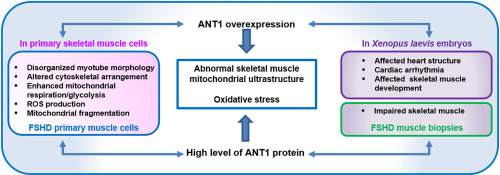
Facioscapulohumeral muscular dystrophy (FSHD) is an autosomal dominant disorder characterized by progressive muscle weakness. Adenine nucleotide translocator 1 (ANT1), the only 4q35 gene involved in mitochondrial function, is strongly expressed in FSHD skeletal muscle biopsies. However, its role in FSHD is unclear. In this study, we evaluated ANT1 overexpression effects in primary myoblasts from healthy controls and during Xenopus laevis organogenesis. We also compared ANT1 overexpression effects with the phenotype of FSHD muscle cells and biopsies.
This Article supports SDG 3 and 5 by highlighting a need for greater involvement of in-country authors on research examining a wider range of gendered COVID-19 impacts, as well as increased representation of diverse topics and publications related to COVID-19 and women's well-being focused on lower income countries.
Background: Identifying how greenspace impacts the temperature-mortality relationship in urban environments is crucial, especially given climate change and rapid urbanization. However, the effect modification of greenspace on heat-related mortality has been typically focused on a localized area or single country. This study examined the heat-mortality relationship among different greenspace levels in a global setting. Methods: We collected daily ambient temperature and mortality data for 452 locations in 24 countries and used Enhanced Vegetation Index (EVI) as the greenspace measurement.
This Article supports SDG 3 and 7 by estimating the prevalence of solid-fuel use with high spatial resolution to explore subnational inequalities, assess local progress, and assess the effects on health in LMICs without universal access to clean fuels.

Pages