
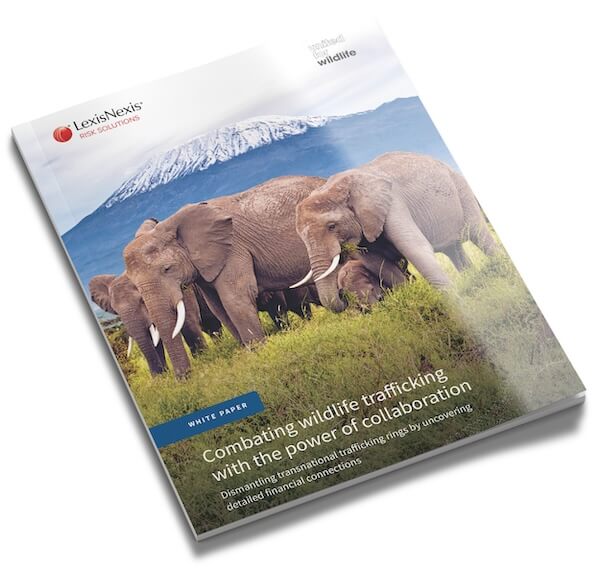
Learn how to help prevent wildlife trafficking by utilising partnerships and data in this joint LexisNexis Risk Solutions and United for Wildlife report.
This article focuses on whether handwriting and typing contribute differentially to lexical acquisition within the alphabetic system, providing distinct sensorimotor experiences for words through different motor actions and consequent attentional and time constraints in producing letters. We examined a sample of middle school students with reading and spelling disabilities alongside age-matched peers with typical development.
Elsevier,
Advancing Brain Cancer Care: Precision, AI Innovation, and African Insights, 2025, pp 209-231
This chapter explores how big data analytics and advanced methodologies like multiomics and AI are transforming brain cancer research, enabling early diagnosis, personalized treatment, and targeted prevention. By improving health outcomes through precision oncology (SDG 3: Good Health and Well-being) and addressing global disparities in cancer care via collaborative initiatives and equitable access (SDG 10: Reduced Inequalities), these data-driven approaches reshape the future of brain cancer treatment worldwide.
This study investigated how repetitive transcranial magnetic stimulation (rTMS) combined with cognitive training affects functional connectivity in both gray matter and white matter in patients with mild to moderate Alzheimer’s disease. Results showed that rTMS modulated activity in key brain regions, particularly within the limbic system, with changes in white matter connectivity correlating with cognitive improvements.
This article describes the discovery and characterization of FJMU1887, a novel brain-penetrant small-molecule inhibitor of Galectin-3 (Gal-3) identified through an AI-driven drug discovery platform. FJMU1887 demonstrated potent anti-inflammatory effects, reduced Aβ pathology, and improved cognitive function in Alzheimer's disease mouse models, highlighting its therapeutic potential for the treatment of Alzheimer's disease.
This review discusses the dual role of amyloid-beta (Aβ) in Alzheimer's disease (AD). While Aβ accumulation is a hallmark of AD pathology, soluble Aβ also plays a neuroprotective role in regulating synaptic plasticity and memory. The review explores the potential of anti-Aβ immunotherapy as a treatment strategy, highlighting the need to balance targeting toxic Aβ species while preserving the physiological functions of Aβ.`
The article provides a comprehensive overview of the role of the endogenous detoxification system in the pathogenesis of age-related neurodegenerative diseases, particularly Alzheimer's disease (AD) and Parkinson's disease (PD). It highlights epidemiological evidence linking environmental toxicant exposure to the onset and progression of these diseases, and discusses how dysfunction of detoxification pathways, including enzymes and transporters, can exacerbate neurodegenerative processes. The article also explores the potential of targeting nuclear receptor signaling pathways, such as the pregnane X receptor (PXR), as a promising therapeutic strategy to restore detoxification capacity and modify disease trajectories.
This content aligns with Goal 3: Good Health and Wellbeing and Goal 9: Industry, Innovation, and Infrastructure by considering the role heavy metals such as lead, mercury, and cadmium can play in Alzheimer's Disease.
The study demonstrates that adopting more climate-friendly diets, which typically involve reduced animal-based food consumption and lower absolute micronutrient intakes, does not substantially increase the risk of micronutrient deficiencies for most nutrients. These findings underscore the importance of assessing both dietary intake and actual nutrient status when evaluating the nutritional consequences of sustainable eating patterns, supporting the potential health and environmental benefits of shifting toward climate-friendly diets.
This perspective highlights strategies for modeling salt tolerance mechanisms, including root system architecture adaptation, salt filtration, adaptation of plant hydraulics, ion compartmentalization, and stomatal responses, to improve model representation and prediction.
