


Try turning off the water supply to your home for a day and see how quickly life changes. Washing your hands, drinking a glass of water, cooking, taking a shower and, perhaps most disruptively, flushing the toilet – all things we take for granted – suddenly become impossible. Yet today, according to the World Health Organization, this is a situation faced by the 2.1bn people worldwide (one in four) without a regular supply of clean, safe water. Even more (3.4bn or roughly one in every 2.4 people) lack access to safely managed sanitation.

It was to stimulate increased efforts to address this daunting crisis that, in 2011, the RELX Environmental Challenge was launched. At the time, with concerns over climate change often dominating public discourse, RELX wanted not only to support the work of the innovators in this field but also to highlight the urgency of addressing global water and sanitation challenges and show how this related to the battle against climate change.
“When we first launched the challenge, we didn’t know what we would get. But right from the beginning we saw really innovative projects,”
says Márcia Balisciano, chief sustainability officer and global head of corporate responsibility at RELX, who explains that applicants can be individuals or start-ups, non-profits or for-profit companies, cross-sector partnerships or academic teams.
Winners not only receive funding – $50,000 for a first place entry and $25,000 for second place – but are also given free access to the more than 250,000 articles in ScienceDirect, the subscription-based scientific, technical and medical database of Elsevier, a RELX subsidiary. Moreover, winners are invited to participate in the company’s global events, helping raise their profile.

Winning projects span a wide range of technologies, regions and business models. “We want to maintain breadth and not be too prescriptive,” says Mirième Hill, corporate responsibility project manager at RELX.
In the Philippines, for example, the Alternative Indigenous Development Foundation has developed a hydraulic ram pump that moves water uphill, delivering water to poor upland villages in far greater volumes than could be carried manually. For communities living on water or in flood prone areas, Wetlands Work developed the HandyPod, which uses three connected containers to take human waste, clean it and discharge it as treated water. And a collaboration between North Carolina State University and the Triangle Environmental Health Initiative and Catapult Design resulted in Flexcrevator, an innovative pit latrine emptying device that sucks out sludge through a hose while preventing trash from entering the system.

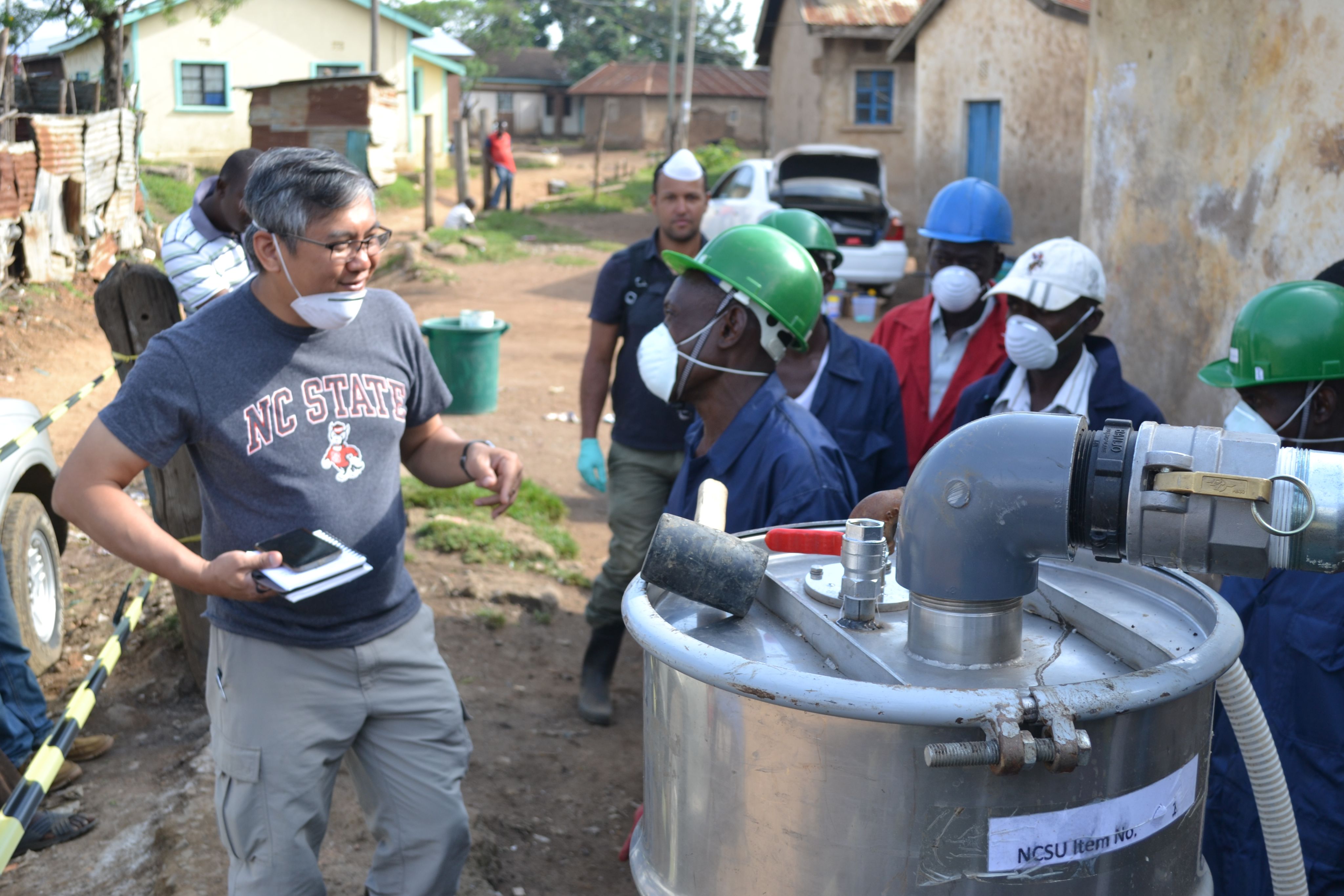
2018 Winner: Flexcrevator
2018 Winner: Flexcrevator
While their ideas vary, what unites the winners, says Hill, is their commitment to building scalable solutions based on data, trusted science, local understanding and deep knowledge of the field. “It’s about mobilising it all,” she says, “so that it actually changes lives.”

Meet the
innovators


César Maldonado


César Maldonado remembers the days when, in his childhood, Mexico's Atoyac was a clean river. “Today, when you look at the water, it’s evident there’s no life in it whatsoever,” he says. Memories of the Atoyac before industrial waste and sewage turned it into one of Mexico's most polluted rivers are what inspired him to become a wastewater treatment innovator. However, what empowered him to take this path was the acquisition of knowledge.
It helped that both his parents worked in scientific fields: biology and chemistry. Then while working on the final project of his master’s degree in engineering at Tecnológico de Monterrey, he and his classmates chose to work on solutions to water pollution. Their transformative moment came after reading a research article in an Elsevier journal that focused on the power of ecological technologies.
It was the start of a journey that would lead to Lombrifiltro, a wastewater treatment system for remote and coastal communities powered by earthworms. Initially Maldonado and his team pursued the idea of using wetlands for wastewater treatment. However, on learning about the digestive power of earthworms as a natural filtering mechanism known as vermifiltration, they changed course.
The result was Lombrifiltro, an alternative to Mexico’s traditional wastewater infrastructure, which is rarely available to the remote coastal and rural communities Maldonado wanted to help. “It’s expensive to maintain sewer systems, the plants are costly to build and operate and their energy use is high,” he says. “But nature has the answer to many of our problems.”
Built with seed funding, the team’s prototype had an unlikely first customer: a zoo that needed to treat the wastewater generated by its elephants. Since then CPlantae, the company behind the system, has evolved from a student initiative to a water and sanitation enterprise that is rolling out hundreds of installations to communities across the country.
In reflecting on what it takes to develop an innovation that succeeds, Maldonado points out that existing technologies, such as vermifiltration, can often provide the most effective way forward. “You don’t need to reinvent the wheel to achieve impact," he says. There’s available knowledge that can be used for the benefit of society, so it’s important to have access to this knowledge.”
“You don’t need to reinvent the wheel to achieve impact. There’s available knowledge that can be used for the benefit of society, so it’s important to have access to this knowledge.”
Joshua Kao
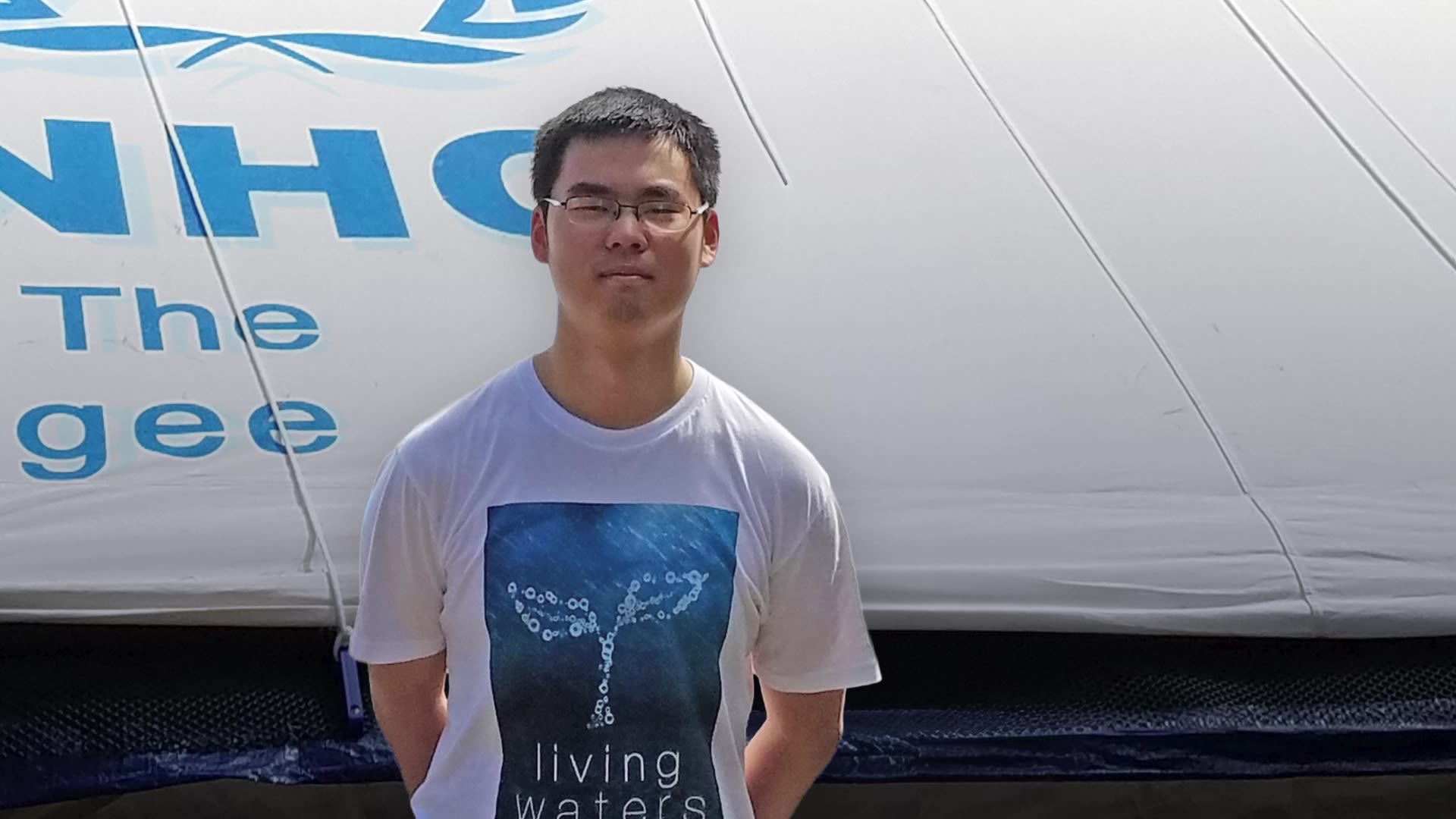

For Joshua Kao, founder and CEO of LivingWater Systems, the decision to abandon one idea is what led him to develop an innovative system that addresses water scarcity for communities living in informal settlements or refugee camps: a portable, low-cost rainwater catchment unit.
Kao, who had been developing a very different product – horticultural kits for off-grid communities – soon realised that the kits’ plants would never survive without irrigation and that lack of access to clean water supplies was a far bigger problem for the customers he hoped to serve.
In informal settlements, where water infrastructure is often lacking, communities are forced to pay extortionate fees to corrupt gangs with water tankers or to walk long distances to wells whose sources are often contaminated. Kao realised that nature could help. “I thought, why don’t they use their houses to collect rainwater?”
He soon discovered the answer to his question. While in informal settlements, cisterns can be used to collect small amounts of rainwater, capturing the larger volumes that flow down from the roofs of homes or refugee camp tents requires guttering, and traditional systems are too heavy for these types of structures.
Finding a solution became Kao’s goal, and it started with a sketch, a roll of tarpaulin and a tent. His prototype worked. It captured the water, and the weight of the guttering unit did not cause his tent to collapse.
After trying out the prototype in the desert region of Rajasthan, India, interviews with local residents revealed high demand for the system. Many iterations later, Kao and his team developed the rainwater catchment system that is now being used in water stressed areas around the world.
Made from treated nylon, it can be packed inside a box the size of a laptop case and takes one person just 20 minutes to set up. “The idea of a gutter unit that can be fitted over the top of a tent, as well as its portability – that’s where the novelty lies,” he explains.
LivingWater Systems is addressing many problems. Communities save money and feel more secure when they don’t have to rely on illegal suppliers. They reduce risk of the health problems associated with contaminated water sources. Moreover, since dirty water causes diarrheal diseases such as dysentery, which prevent people from absorbing the protein and nutrients in what they eat, the system contributes to global food security.
Kao understands these links. “Malnutrition is largely a matter of unhygienic water sources,” he says. “So the idea of providing a newfound clean water supply is something that was very exciting to us.”
“The idea of a gutter unit that can be fitted over the top of a tent, as well as its portability – that’s where the novelty lies.”
Virginia Gardiner
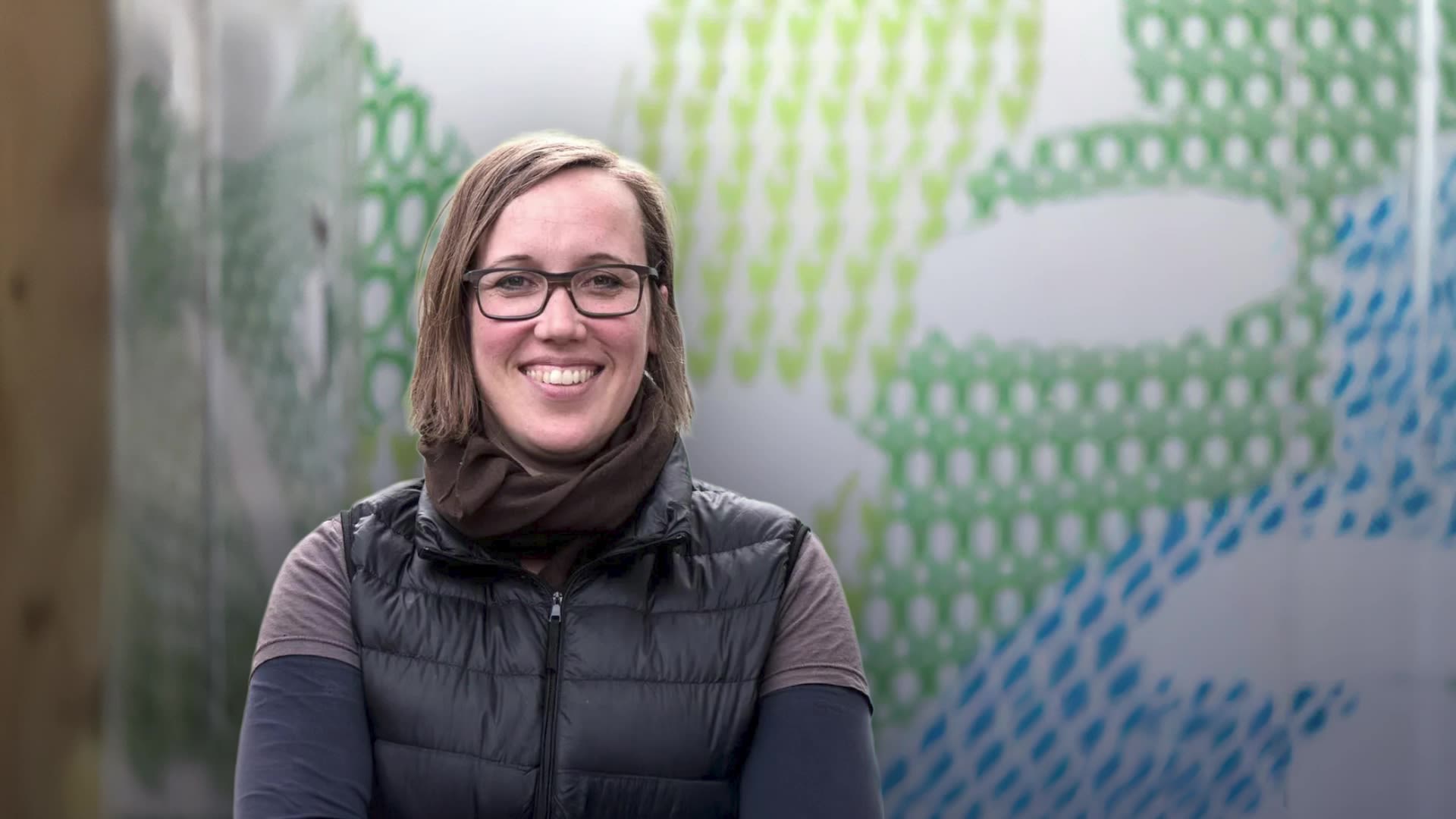

As a junior reporter, Virginia Gardiner was sent to cover a kitchen and bath industry trade show in Orlando. “No one else wanted to go,” she recalls, “And I thought there might be some ingenious new toilet designs at the show.” She found none. But the show’s lack of innovation set Gardiner thinking. “I felt like the toilet was a symbol of this mentality in our society that needed to be changed,” she says. “Because we were using gallons of water to take our waste away.”
She did not know it at the time, but it would be the start of her career devoted to improving sanitation as CEO and inventor of Loowatt. This waterless system packages waste into biodegradable liners, eliminating odour and enabling it to be used in the production of energy and fertiliser.
Before founding her company, Gardiner equipped herself with knowledge. She gained a master’s degrees in mechanical engineering from London’s Imperial College and in industrial design engineering from the Royal College of Art. For her study project, she chose sanitation. “I thought I could make a different toilet,” she says. As she continued her research and developed her ideas, Gardiner started seeing opportunities. “When you scratch the surface, you realise there’s so much potential.”
First, she saw the opportunity to improve human health through more hygienic sanitation while turning waste into energy and using nutrient recovery technology to produce fertiliser. But as importantly, she recognised that to scale up improved sanitation, she needed to design a toilet that offered a more pleasant experience than that of most traditional systems, particularly in developing countries. “It’s a fundamental part of the human experience,” she says. “And it’s been forgotten.”
In 2014, Loowatt installed a toilet trailer at the Latitude Festival, an annual music and arts event held in a park in Suffolk. People’s reactions confirmed that she had met at least one of her goals. “They were coming out with huge smiles on their faces,” she recalls.
Today, Loowatt’s toilets are still being used at UK festivals and other events, but also in Madagascar and South Africa, where they are filling gaps in sanitation with safe, clean, affordable toilets and waste management systems.
Now a RELX Environmental Challenge judge, Gardiner loves to visit these installations to see the impact the toilets are having on people’s daily lives. “That’s really motivating,” she says. “There’s huge demand and huge potential for growth – our next step is to capture that.”
“When you scratch the surface, you realise there’s so much potential.”
Looking back,
moving forwards


As any social innovator will tell you, the hard work of building the technology, raising the funding, finding a market and refining the business model means all forms of support are welcome. And for many of the winners of the RELX Environmental Challenge, the award has provided vital support as they work to scale up their solution. For Westlands Work, for example, it even kept the lights on during the Covid pandemic, providing eight months of funding when no other income source was available.
In some cases, the Challenge has acted as a catalyst for better solutions. For example, Green Empowerment – which builds clean water and renewable energy infrastructure for Indigenous and rural communities – prototyped a chlorine management system for the award. The system did not ultimately prove viable, but because it prompted a focus on improved chlorination and water quality treatment and testing, Green Empowerment made improvements to the system design and standards it now uses across its project portfolio.
Meanwhile, the award itself is changing. While its model remains the same, the number of applicants is increasing rapidly, particularly given current constraints on development funding and increased use of AI for the application process. “It means we need to be even more focused on our criteria and streamlined on what we’re looking for,” says Hill.
Another shift is in the growing number of applicants and winners that, rather than developing a single technology, are pursuing business model innovation and developing new types of partnerships that ultimately expand the wider solutions ecosystem.
Broadening the approach, says Hill, is also taking the awards into a new frontier: the world’s oceans. “We’re looking at how we can expand the Challenge to include ocean health and highlight the link between healthy oceans and clean water and sanitation,” she says. “That’s the next stage.”
Perhaps most importantly, the awards remain a means of increasing awareness of the water and sanitation nexus and its link to everything from climate change and biodiversity to global development.
“Without clean water and access to sanitation, it will be impossible to address the rest of the global goals,” says Balisciano. “They’re the pillars for everything.”
“Without clean water and access to sanitation, it will be impossible to address the rest of the global goals. They’re the pillars for everything.”
From 2011 - 2026, the RELX Environmental Challenge has supported 30+ innovations across 25+ countries
Gambia
eWATER Services – First Prize Winner 2017
Winning the RELX Environmental Challenge played a critical role in eWATER’s early development, helping refine its technology and business model while providing vital funding and global recognition. Since then, eWATER has expanded into Tanzania and Kenya, installing 881+ smart taps across 115 communities and delivering reliable, digitally managed water access to over 300,000 people.
By mid-2025, the system had dispensed more than 1.5 billion litres of clean water using IoT-enabled, contactless technology.
Looking ahead, eWATER is focused on scaling to reach 1 million customers by 2028.


Cambodia
Wetlands Work! – Second Prize Winner 2018
Since receiving the RELX Environmental Challenge award, Wetlands Work! (WW!) has grown from an early-stage initiative into a scaling sanitation innovator across Southeast Asia. RELX funding proved critical, sustaining the organisation through the challenging period of the COVID-19 pandemic and enabling participation at World Water Week, where pivotal international partnerships were formed.
WW! has since secured EUDev grants with Save the Children and Oxfam, delivering sanitation solutions to more than 320 households and 37 floating schools across Cambodia and Myanmar, while creating 30+ green jobs through local business operators. With a focus on scalable, locally driven solutions, WW! is now expanding into new sanitation applications across the region, highlighting the RELX award as a catalyst for long-term impact.


Philippines
AIDFI – Second Prize Winner 2015
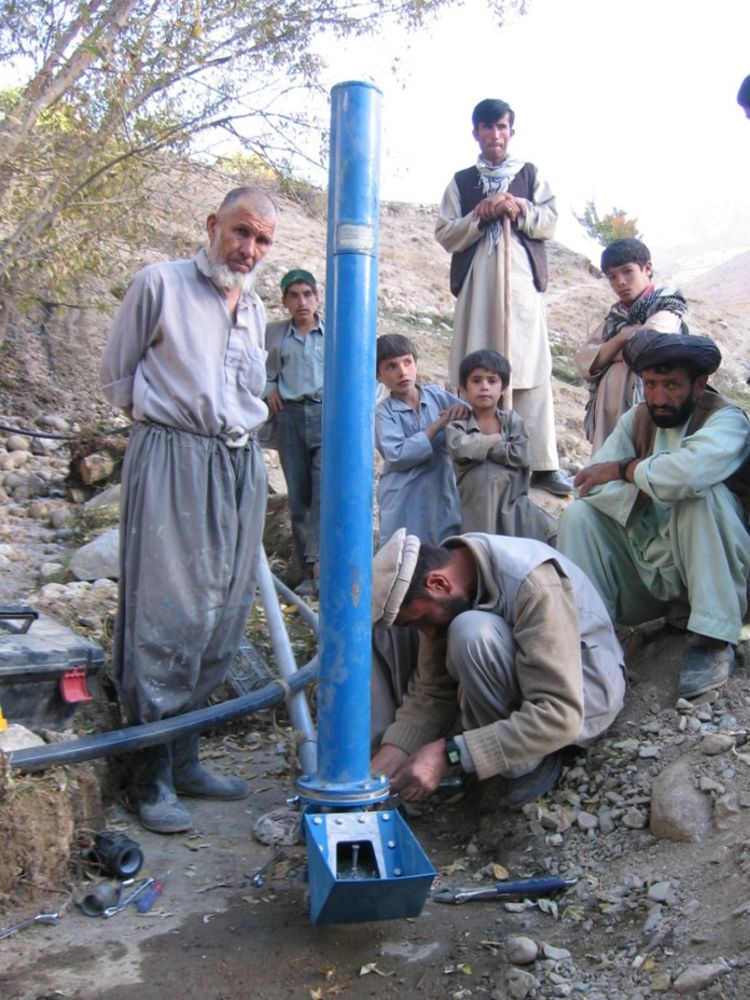
AIDFI is a Philippines-based social enterprise providing reliable drinking water to upland rural communities through a unique, locally made hydraulic ram pump. Using the natural pressure of falling water, the pump lifts water to villages located above the source without electricity or fuel, typically serving around 600 people per system.
AIDFI has installed over 1,000 ram pumps across 570 villages, increasing water supply volumes by up to ten times, improving health outcomes and reducing the time and cost of water collection. AIDFI has successfully transferred the technology to countries including Afghanistan, Nepal, Colombia and Mexico.

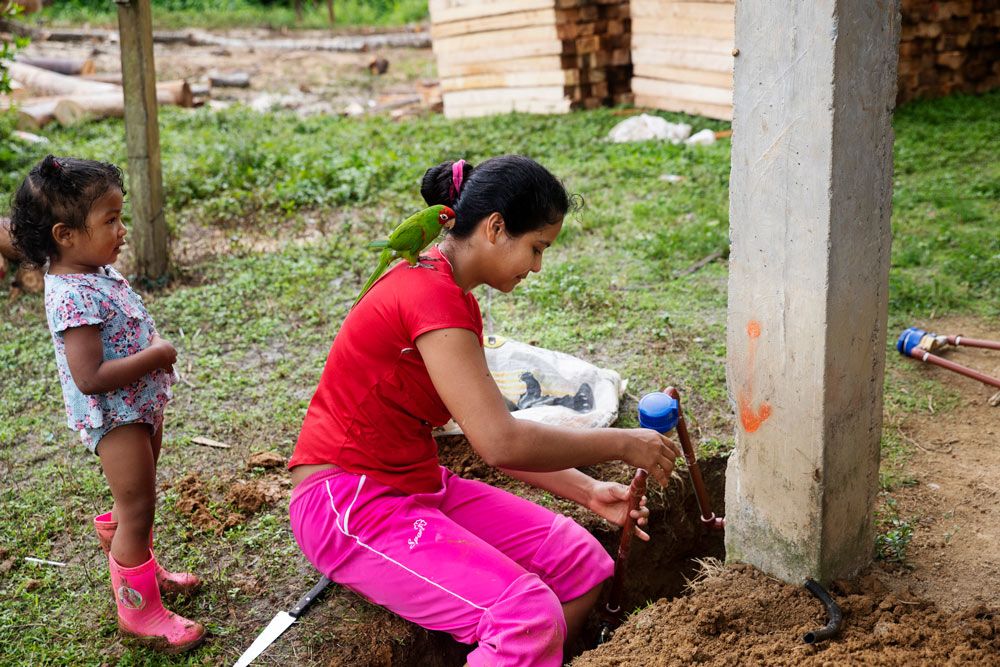
Nicaragua
Green Empowerment – First Prize Winner 2021
Winning the RELX Environmental Challenge catalyzed a period of major organisational expansion for Green Empowerment, accelerating its water access and climate resilience work across Latin America and beyond. Since 2021, the organisation has strengthened its presence in six countries, reopened operations in Bolivia, launched new programming in Honduras, and increased its active project portfolio by 37%.
In 2024 alone, Green Empowerment delivered 31 water and sanitation projects for over 19,000 people, including large-scale piped systems, treatment plants, and community-led management initiatives. Their work now integrates updated standards in chlorination, water quality testing, and system design directly stemming from insights gained during the Challenge.
The success of their Latin America model enabled replication in Uganda, where a new piped system now serves 5,000 people with innovative household metering and strong community water board management.

Mexico
Caminos de Agua – First Prize Winner 2022
Caminos de Agua, a grassroots nonprofit based in the Upper Río Laja Watershed in Guanajuato, Mexico, addresses some of the region’s most serious public health challenges: contaminated and scarce drinking water. The organisation combines community-driven water quality monitoring with innovative, low-cost solutions such as large-scale rainwater harvesting and a community-owned Groundwater Treatment System (GTS) that effectively removes arsenic and fluoride from groundwater, contaminants found at dangerously high levels in local wells.
Caminos de Agua’s impact spans tens of thousands of people across northern Guanajuato and beyond, with more than 50,000 people currently served and a goal to reach 250,000 by 2030. Its programs include monitoring water quality, building over 1,500 rainwater systems that have delivered hundreds of millions of litres of clean water, and scaling its GTS technology to provide community-level safe drinking water year-round.
Looking Back - 15 Years of Impact Innovation




Folia Water, Bangladesh (2025)
Folia Water, Bangladesh (2025)

LivingWaters Systems, India (2024)
LivingWaters Systems, India (2024)

TU Delft Water For Impact, Ghana (2023)
TU Delft Water For Impact, Ghana (2023)

Caminos de Agua, Mexico (2022)
Caminos de Agua, Mexico (2022)

Green Empowerment, Nicaragua (2021)
Green Empowerment, Nicaragua (2021)

CUBEX S.A.L, Lebanon (2020)
CUBEX S.A.L, Lebanon (2020)

SolarSack, Uganda (2019)
SolarSack, Uganda (2019)
Flexcrevator, Kenya (2018)
Flexcrevator, Kenya (2018)

Aeropurifier, Columbia (2017)
Aeropurifier, Columbia (2017)
LooWatt, Madagascar (2016)
LooWatt, Madagascar (2016)
AguaClara, India (2016)
AguaClara, India (2016)

Alternative Indigenous Development Foundation (AIDFI), Phillipines (2015)
Alternative Indigenous Development Foundation (AIDFI), Phillipines (2015)

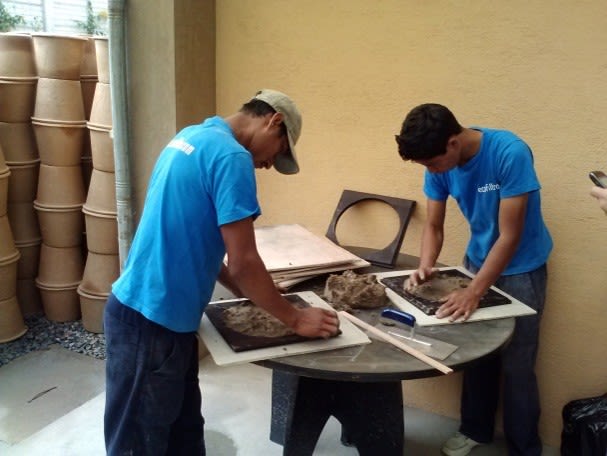
Ecofiltro S.A, Guatemala (2014)
Ecofiltro S.A, Guatemala (2014)
Gadgil, India (2013)
Gadgil, India (2013)

Watershed, Cambodia (2013)
Watershed, Cambodia (2013)

Sanergy, Kenya (2012)
Sanergy, Kenya (2012)
Centre for Affordable Water and Sanitation Technology, Nepal (2012)
Centre for Affordable Water and Sanitation Technology, Nepal (2012)

Tagore-SenGupta Foundation, Cambodia (2011)
Tagore-SenGupta Foundation, Cambodia (2011)